
Peppermint is one of the world’s most beloved medicinal herbs — bright, refreshing, and immediately recognizable. I'm excited to share some of my favourite Peppermint Benefits, remedies + everyday uses so that you may just fall in love with this special plant friend!!
Do you know that Peppermint is a hybrid of watermint and spearmint?
Peppermint has long been used to soothe digestion, clear the head, awaken the senses, and calm spasms throughout the body -- there's so much more to this amazing plant!!

I've long loved peppermint as one of m my most beloved herbs in both the kitchen and the home apothecary — and for good reason. It's bright, cooling, and wonderfully aromatic!
Peppermint brings a sense of freshness wherever it goes. A simple cup of peppermint tea can soothe a heavy meal, calm a tense stomach, awaken a tired mind, or offer comfort during times of stress and congestion. Few herbs are as instantly recognizable or as universally appreciated.
My hope is that I can inspire you to become more involved with peppermint as explore some of the traditional uses, herbal actions, wellness benefits,
as well as simple ways to weave this cooling plant ally into your daily routines !
This herb moves energy. Herbalists often think of peppermint as a “circulatory awakener” — helping stagnant digestion, tension headaches, sluggishness, and even emotional heaviness begin to shift and open.
Peppermint Benefits :
We use peppermint to help with:
* Digestive discomfort
* Gas and bloating
* Nausea
* Tension headaches
* Congestion
* Mental fatigue
* Heat and inflammation
Its strong aromatic oils make it both stimulating and relaxing at the same time — an unusual and beautiful combination.
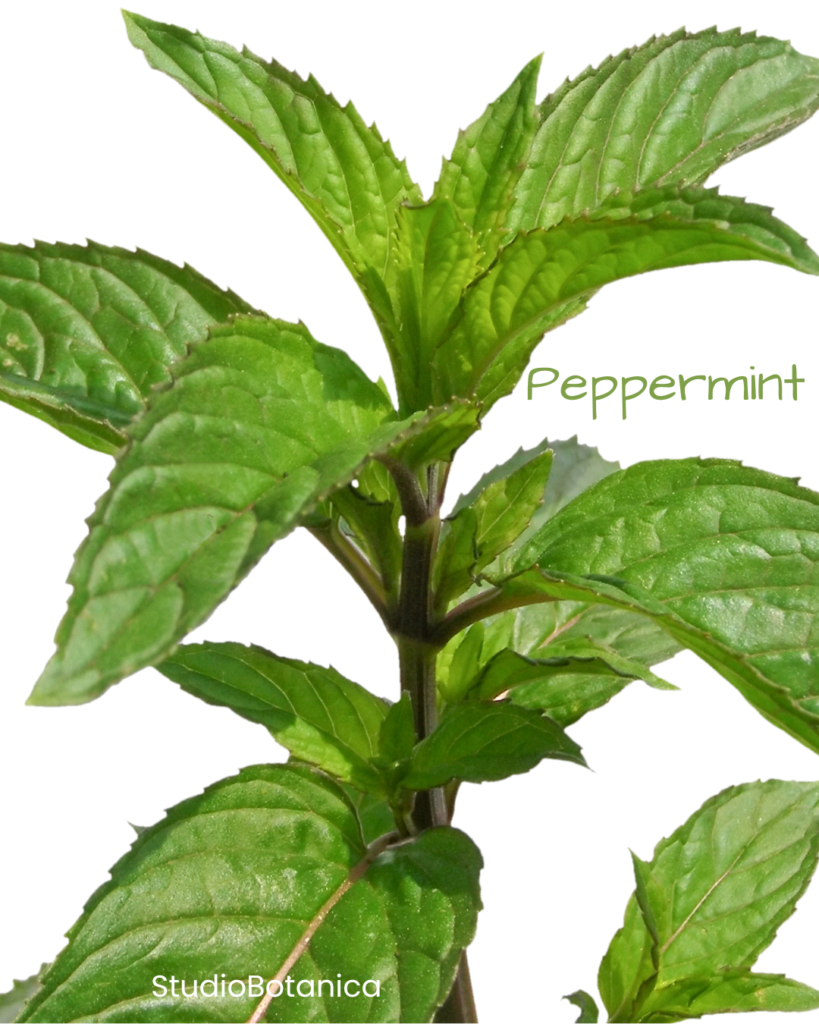
Peppermint Benefits ~ Highlights:
* Carminative
* Antispasmodic
* Aromatic bitter
* Mild analgesic
* Diaphoretic
* Nervine
* Decongestant
Please see here for the glossary of terms .. right here inside Studio Botanica to help with any questionable terms.
Peppermint Remedies:
* Tea after heavy meals
* Cooling summer herb beverage
* Steam inhalations for colds
* Compresses for headaches
* Settling travel nausea
* Freshening breath
* Calming nervous digestion
Peppermint Tea
This tea is excellent to enjoy after a heave meal. Peppermint is one of the classic digestive herbs for a reason.
Its aromatic oils help relax digestive tension, ease bloating, reduce gas, and encourage smoother digestion after rich or heavy meals.
A warm cup of peppermint tea after dinner can feel especially soothing when the stomach feels overly full, sluggish, or uncomfortable.
How to Make:
Steep 1–2 teaspoons dried peppermint (or a small handful fresh) in hot water for 10–15 minutes. Sip slowly after your meal. Feel better!
We can also add:
- Fennel seed for gas and bloating
- Ginger for sluggish digestion
- Chamomile for stress-related stomach tension
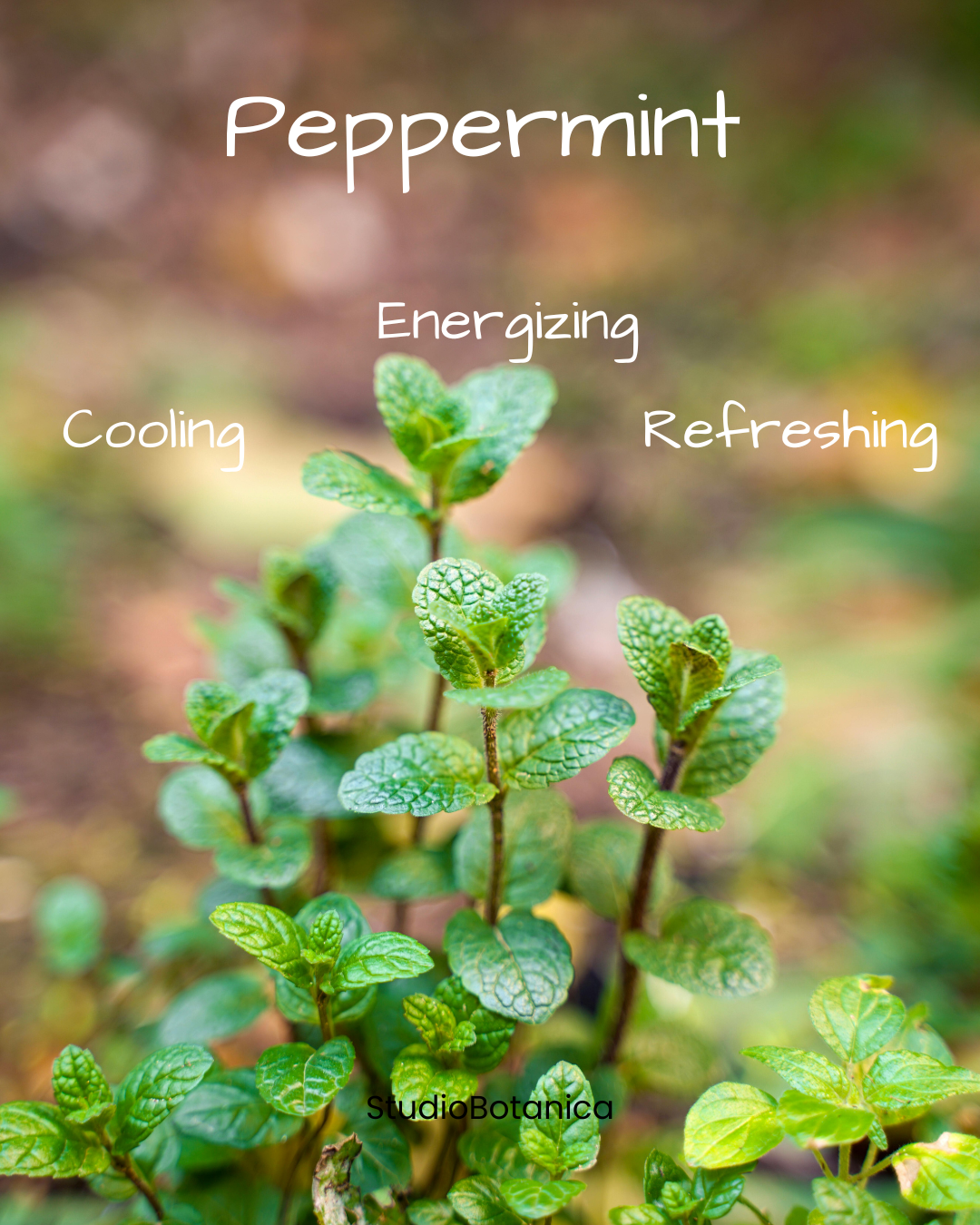
Use Peppermint for Cooling Summer Herb Beverages
Peppermint naturally cools the body and refreshes overheated systems, making it a beautiful herb for warm weather.
It can help relieve feelings of heat, irritability, sluggishness, and summer fatigue while encouraging hydration and circulation.
Here are some simple summer ideas for you:
- Add fresh peppermint to iced tea or lemonade
- Infuse water with cucumber, mint, and citrus
- Freeze peppermint tea into ice cubes for summer drinks
- Add chopped mint to fruit salads or yogurt
Peppermint also pairs beautifully with watermelon, berries, lime, and basil during the warmer months.
Peppermint Benefits + Remedies with Herbal pairings:
Peppermint works beautifully with:
* Chamomile
* Lemon balm
* Fennel
* Ginger
* Rose
* Nettle
* Lavender
I also love to pair Peppermint with Basil -- Here's a fave of my family-- it's a delicious recipe "pasta with basil + mint". Check it out here.

As with any herb, we need always to be advised of any 'cautions' and safety notes:
Safety Notes: Peppermint is generally very safe in culinary and tea amounts.
We want to use caution with:
* Severe acid reflux/GERD (may worsen symptoms)
* Very young infants around concentrated essential oil
* Excessive use during intense dryness or depletion
Peppermint Benefits - Let's explore the Peppermint's Essential oil gifts
Peppermint essential oil is extremely concentrated and should always be used carefully and diluted properly.
I rarely get into a discussion of essential oils when discussing an herbal ally -- In the case of peppermint,
I make an exception as there are some very helpful and special attributes we can use often to support ourselves.
I've helped dozens of folks over the years with the idea of using Peppermint oil in enteric-coated capsules like these here for help with IBS (Irritable Bowel syndrome) In fact I have used it my self, at one point with great results.
Here's one of several studies talking about the use of peppermint oil for this purpose.
Peppermint essential oil is one of the most widely used and versatile herbal oils in the home apothecary. Strong, cooling, and intensely aromatic, even a very small amount can go a long way. Its fresh scent is both energizing and comforting, making it useful for physical discomforts as well as mental fatigue.
Because peppermint oil is highly concentrated, it should always be used thoughtfully and properly diluted.
Common Uses for Peppermint Essential Oil
Cooling Headache Support
Peppermint oil is often used for tension headaches and overheated, “stuffy” feelings in the head.
Dilute 1–2 drops in a teaspoon of carrier oil and apply gently to temples, forehead, or back of neck. Avoid the eye area completely.
Congestion & Sinus Support
The cooling aroma can help create a sensation of clearer breathing during colds and seasonal congestion. Peppermint oil is so easy to use:
- Add 1 drop to a steam bowl
- Diffuse into a room
- Place a drop on a tissue and inhale gently
Muscle & Tension Relief
Peppermint oil creates a cooling sensation that many people find soothing for tired muscles, neck tension, and sore feet.
Try: Adding a few diluted drops to:
- massage oil
- foot soaks
- bath salts
- muscle balms
Peppermint pairs beautifully with lavender and rosemary in massage blends.
Mental Clarity & Energy
The scent of peppermint is famously refreshing and awakening. Many people use it during long workdays, studying, driving, or periods of mental fatigue.
Try these Easy Ideas:
- Diffuse during work sessions
- Inhale from palms after dilution
- Add a drop to a personal aromatherapy inhaler
Nausea & Motion Support
The aroma of peppermint oil may help settle feelings of queasiness or motion discomfort for some people.
Place 1 drop on a cotton ball or tissue and inhale occasionally while traveling.
Cooling Summer Relief Spray
Peppermint oil can feel wonderfully refreshing during hot weather. I love to make this to use to cool off.
Shake well before each use and lightly mist clothing or the back of the neck (avoid eyes and face). Very cooling as a foot spray !!
Cooling Mist Idea:
- 1 cup distilled water
- 1 teaspoon witch hazel
- 2–3 drops peppermint essential oil
Peppermint Oil Safety Notes
Peppermint essential oil is very potent.
- Always dilute before applying to skin
- Avoid contact with eyes and sensitive areas
- Use cautiously around children
- Avoid excessive use during pregnancy unless guided by a qualified practitioner
- Not recommended directly around infants
- Too much peppermint oil may irritate sensitive skin or worsen reflux in some people
A little truly goes a long way with peppermint essential oil. One drop often provides plenty of aromatic support.
Peppermint reminds us that medicine can feel uplifting.
It cools what is overheated, loosens what is tight, and refreshes what feels weary.
Herbalists value it for its ability to move stagnation, relax tension, and cool overheated conditions in the body. It is especially well known for supporting digestion, easing gas and bloating, relieving nausea, and helping with headaches linked to tension or heat.
Yet peppermint offers more than physical support. There is something emotionally uplifting about this herb — a clarity and brightness that feels almost cleansing. Its refreshing scent can help sharpen focus, revive mental fatigue, and create a feeling of spaciousness when life feels heavy or cluttered.
In everyday life, peppermint is beautifully versatile. It can be infused into teas, syrups, vinegars, oils, desserts, summer drinks, facial steams, herbal baths, and simple home remedies.
Fresh peppermint growing in the garden or in a pot by the door becomes an invitation to pause, breathe deeply, and reconnect with the senses.
Peppermint reminds us that healing does not always need to be complicated.
Sometimes comfort arrives in the form of a fragrant cup of tea, a cooling breath, or the simple act of tending a familiar plant.
Whether you use peppermint for digestion, stress relief, headaches, or everyday enjoyment, this vibrant herb offers both medicine and refreshment in equal measure.
May it encourage us all to slow down, breathe deeply, and welcome a little more clarity, calm, and freshness into your daily life.
Here's to our health -- Here's to using this special friend Peppermint --often to feel our best. Embrace peppermint.
Carol xo
Leave a Reply